


How to Build a Bedtime Routine That Actually Helps You Sleep
You know the feeling. You're exhausted, properly tired, and yet the moment your head touches the pillow, your brain decides now would be an excellent time to replay every conversation you've had this week. Or plan tomorrow's to-do list. Or remember something you forgot to email someone about three days ago.
For something so fundamental to how we function, sleep can feel surprisingly hard to get right. And most of the advice out there, avoid screens, don't drink coffee after lunch, make your bedroom cold, isn't wrong, exactly. It just doesn't feel like enough.
The truth is that building a bedtime routine that works isn't about following a rigid ten-step protocol. It's about giving your nervous system a series of consistent signals that the day is ending and it's safe to wind down. When those signals become habits, sleep tends to follow more easily.
Here's how to build one that actually works, and why the details matter more than you might think.
Why routines work (and willpower doesn't)
There's a reason children sleep better with a bedtime routine and it isn't because they're more disciplined than adults. It's because repetition teaches the brain what comes next. Bath, story, lights out. After a while, the brain starts preparing for sleep before the lights even go off.
Adults are no different. The problem is that most of us have accidentally built a pre-sleep routine that signals the opposite of calm, scrolling through news, answering emails in bed, watching one more episode of something that's slightly too tense. Your brain is getting ready for engagement, not rest.
A good bedtime routine doesn't need to take long. Twenty to thirty minutes is plenty. What matters is that the same sequence happens at roughly the same time, most nights. Consistency is the mechanism. The specific activities are the detail.
Your brain doesn't switch off like a light. It dims gradually, but only if you give it a reason to.
A bedtime routine that earns its name
There's no perfect routine, what works for you will depend on your life, your schedule, and what actually feels good rather than performatively healthy. But the following steps are a solid framework to build around.
Set a consistent wind-down time
Pick a time roughly 30 minutes before you want to be asleep, and make it non-negotiable. This is your cue. Everything after this point is about slowing down.
If you currently go to bed at wildly different times, start by anchoring your wake-up time instead. Your body will gradually pull your tiredness earlier to match. It takes a few weeks, but it works.
Move away from screens
This is the one everybody knows and almost nobody does. Blue light suppresses melatonin production, yes, but it's the content that's the real problem. Social media, news, and work emails all trigger dopamine and cortisol responses that are actively unhelpful when you're trying to sleep.
You don't have to put your phone in another room (though it helps). Switching to something passive, a book, a podcast, music, makes a noticeable difference within days.
Add something physical that signals "the day is done"
This is where the routine earns its name. You need a physical action that your body begins to associate with sleep. Something tactile. Something that involves a different sensory experience from the rest of your evening.
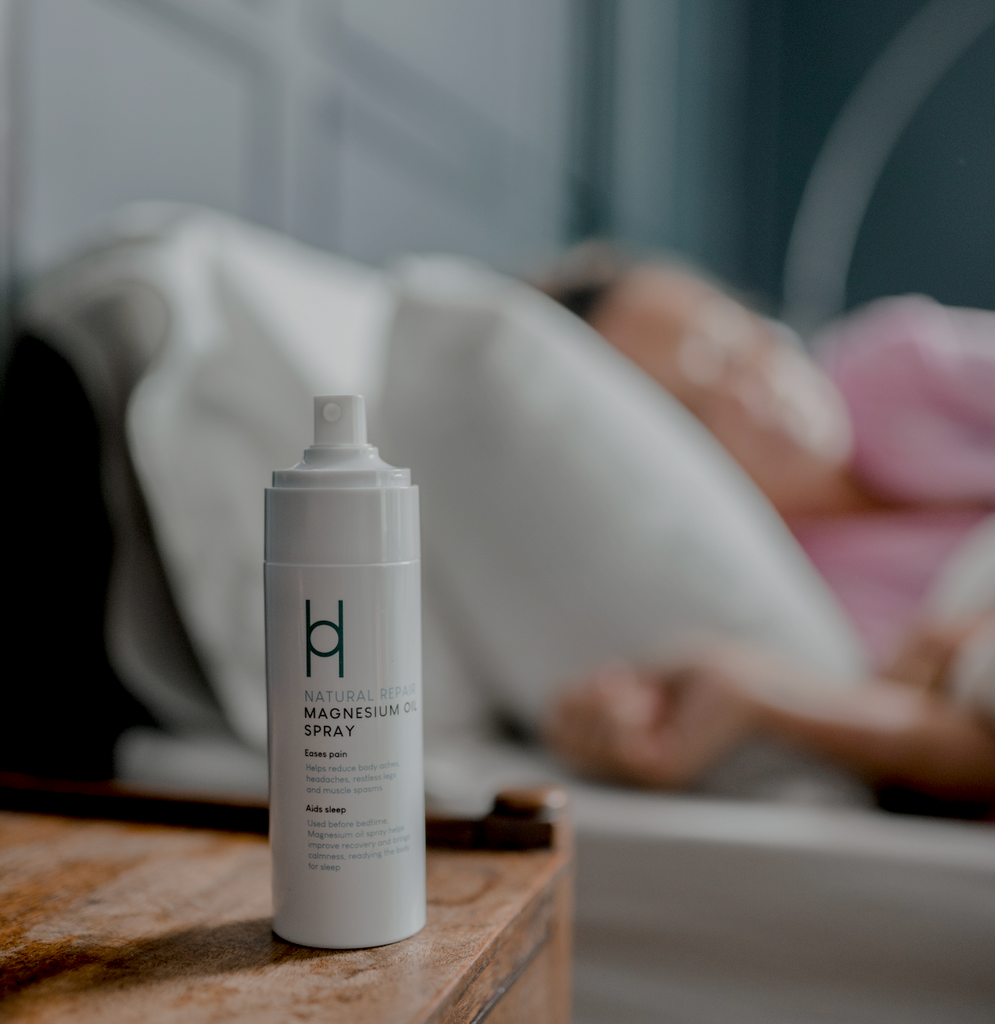
For a lot of people, this is where magnesium comes in. Applying a topical magnesium spray to your skin, behind the knees, inside the elbows, the soles of your feet, gives your body a distinct sensory cue. The slight tingle, the cool sensation, the act of rubbing it in. Over time, your nervous system starts to recognise this as the signal that it's time to shift gear.
Magnesium contributes to normal functioning of the nervous system and normal muscle function. When your muscles are holding tension from the day, which they almost certainly are, that support matters.
Harrogate Organics Magnesium Spray
Our award-winning magnesium spray uses Zechstein magnesium chloride for transdermal application. Over 3,000 five-star reviews from customers who've made it part of their nightly routine. Apply 10–15 sprays to the soles of your feet and inside your elbows before bed.
Shop Magnesium SpraySet the atmosphere
Temperature, light, and scent all contribute to how quickly your brain transitions into sleep mode. A cool room (around 16–18°C) is ideal. Dim lighting tells your circadian clock it's evening. And certain scents, lavender and chamomile in particular, have been used for centuries to promote a sense of calm.
A pillow mist is one of the simplest additions to a routine. It takes two seconds, it smells lovely, and it becomes another sensory anchor your brain associates with sleep.
Sleep Calming Pillow Spray
A calming blend of lavender and chamomile, designed to create a soothing atmosphere as you settle in. A couple of spritzes on your pillow each evening, and it becomes part of the ritual.
Shop Pillow SprayGive your thoughts somewhere to go
The racing mind is the number one enemy of sleep, and you can't outrun it by lying there telling yourself to stop thinking. Your brain needs an output.
Keep a notebook by the bed. Write down anything that's circling, tomorrow's tasks, unresolved worries, things you want to remember. It doesn't need to be elegant. The act of putting it on paper tells your brain it's been dealt with. You can pick it up again in the morning.
If journaling feels too structured, try a simple brain dump: set a timer for two minutes and write whatever comes. Then close the book.
Breathe deliberately
The last step before sleep should be the simplest. Slow, deliberate breathing activates the parasympathetic nervous system, the body's "rest and digest" mode. The 4-7-8 technique works well: breathe in for 4 seconds, hold for 7, exhale for 8. Even three cycles can shift your state noticeably.
Don't overthink it. The point isn't to master a breathing exercise, it's to slow your heart rate and signal to your body that there's nothing it needs to be alert for right now.
What gets in the way (and how to handle it)
Even with a solid routine, some nights won't work. That's normal. Here are the most common obstacles and how to think about them.
You can't switch off after a stressful day. On particularly wired evenings, double down on the physical cues. An extra few sprays of magnesium on your shoulders and neck. A warm shower before bed. Slower, deeper breathing. Your body can lead your mind into calm even when your mind isn't cooperating.
You wake up at 3am. Middle-of-the-night waking is often related to blood sugar dips, stress hormones, or simply needing the bathroom. If it happens regularly, look at your evening meal timing and caffeine intake first. If you do wake, resist the urge to check your phone, lie still, breathe slowly, and let your body stay in rest mode.
Weekends throw everything off. Sleeping in by an hour or so is fine. Sleeping in by three hours resets your circadian rhythm and makes Monday morning significantly worse. Try to keep your wake time within a 60-minute window, even at weekends.
Magnesium contributes to a reduction of tiredness and fatigue and to normal psychological function. If you're feeling run down during the day, it may be worth looking at your magnesium levels as well as your sleep routine. The two are more connected than most people realise.
The compound effect of good sleep
Better sleep doesn't just mean feeling less tired. It affects your mood, your focus, your patience, your appetite, your immune function, and your ability to handle stress. It's the single biggest lever most people aren't pulling.
A bedtime routine won't fix a clinical sleep disorder, if you suspect something deeper is going on, speak to your GP. But for the vast majority of people who are simply sleeping badly because modern life doesn't make it easy, a consistent routine with the right physical cues can make a genuine difference within a couple of weeks.
Start simple. Pick two or three of the steps above and try them consistently for a fortnight. You'll know if it's working because you'll notice it in the mornings, not just the evenings.
Ashwagandha
If stress is the main thing keeping you awake, ashwagandha is worth considering as part of a wider approach. This ancient adaptogenic herb has been used in Ayurvedic tradition for centuries to support relaxation and general wellbeing.
Shop AshwagandhaNot sure where to start?
Our Wellness Survey takes a few minutes and recommends products based on your specific concerns, whether that's sleep, stress, energy, or all of the above.
Take the Wellness Survey Shop Sleep CollectionFrequently Asked Questions
Most people notice an improvement within one to two weeks of following a consistent routine. The key is repetition, your brain needs time to build the association between your routine activities and the onset of sleep. Give it at least a fortnight before judging whether it's helping.
We recommend applying 10–15 sprays to areas where the skin is thinner and absorption may be more effective, the soles of your feet, inside your elbows, and behind your knees. You can also massage a few sprays into your shoulders and neck if you're carrying tension. A slight tingling sensation is normal, especially when you first start using it.
Yes, a mild tingle or slight warmth is common and tends to reduce with regular use. If you have sensitive skin, try our Sensitive Skin Magnesium Spray, which is formulated with manuka honey, chamomile and arnica for a gentler application.
Absolutely. Topical magnesium spray is designed for daily use and many of our customers use it as part of their nightly routine. Consistency is what makes it effective as a bedtime cue.
Magnesium spray is applied to the skin and absorbed transdermally, bypassing the digestive system. Many people find this more convenient and report noticing effects more quickly than with oral supplementation. Both are valid ways to support your magnesium intake, it's about what works best for your lifestyle.
If you've been struggling with sleep for more than a few weeks despite making lifestyle changes, or if you experience symptoms like excessive daytime sleepiness, loud snoring, or breathing interruptions during sleep, it's worth speaking to your GP. A bedtime routine can help with general sleep quality, but persistent sleep issues may need professional assessment.

