


Six Natural Pillars to Navigate Menopause
For years, menopause has been one of those things women just didn't talk about openly. You'd suffer through the hot flushes, the sleepless nights, maybe mention it quietly to your GP, and get on with it. But that's changing.
This year's World Menopause Day theme is Lifestyle Medicine, and honestly, it's a breath of fresh air. The International Menopause Society has put together evidence showing that straightforward lifestyle changes can make a real difference to how you experience this transition. We're not talking miracle cures or expensive treatments here—just practical approaches that actually work with your body rather than against it.
With around 13 million women in the UK currently going through perimenopause or menopause, it's high time we started treating this as a normal life stage instead of something to just endure quietly.
The Six Pillars of Lifestyle Medicine
The lifestyle medicine approach breaks down into six main areas:
- Healthy Eating
- Physical Activity
- Mental Wellbeing
- Restorative Sleep
- Avoiding Risky Substances
- Nurturing Healthy Relationships
What You Eat Matters More Than Ever
Your nutritional needs change quite a bit during menopause. As oestrogen levels drop, everything from your bone density to your metabolism gets affected.
The right nutrition can help manage hot flushes, keep your bones strong, maintain a healthier weight, and reduce your risk of heart disease (which does increase after menopause, unfortunately).
Some foods that really help:
- Calcium-rich foods are crucial now—you're looking at 1,200mg daily from dairy, leafy greens, or fortified plant alternatives
- Phytoestrogens (found in soya, linseed, chickpeas) might help with hot flushes for some women
- Omega-3s from oily fish, walnuts, and flaxseeds support your heart and brain
- Fibre helps with gut health and weight management
On the flip side, many women find that cutting back on caffeine, alcohol, and spicy foods helps with hot flushes and night sweats. Everyone's different though—keeping a food diary can help you spot your own triggers.
Our Turmeric & Black Pepper supplement packs 2,500mg of turmeric with added black pepper for better absorption. It's brilliant for joint health, which becomes more of an issue as oestrogen levels drop.
Getting Your Body Moving
Exercise during menopause isn't about slogging away at the gym (unless that's your thing). It's about finding movement that feels good and actually serves your changing body.
Regular movement helps keep your bones dense, supports your heart, maintains muscle mass (which you naturally lose during menopause), boosts your metabolism, and can genuinely reduce symptoms like hot flushes and mood swings.
The research backs this up:
- Weight-bearing exercise reduces fracture risk
- Cardio work supports your heart
- Strength training keeps your muscle mass up and your metabolism ticking
- Yoga and Pilates improve flexibility and help with balance (more important as we age)
The goal is 150 minutes of moderate activity weekly, plus a couple of strength sessions. But look, any movement counts. A decent walk counts. Dancing in your kitchen counts. Just get moving in whatever way works for you.
After a workout, try our vegan body brush to boost circulation and slough off dead skin. Dry brushing before you shower stimulates your lymphatic system and helps with skin elasticity—which takes a hit during menopause as collagen production drops off.
Looking After Your Mental Health
The emotional side of menopause gets less attention than it should, but it's just as real as the physical symptoms. Those fluctuating hormones mess with your neurotransmitters, leading to mood swings, brain fog, anxiety, or low mood.
Your mental health affects everything else. Finding ways to support your emotional wellbeing during menopause isn't a luxury—it's essential for getting through this transition in one piece.
What actually helps:
- CBT (Cognitive Behavioural Therapy) has been proven to work for menopausal anxiety and low mood
- Mindfulness and meditation can help manage stress
- Staying connected with friends and family makes a huge difference
- Creative activities give your mind something positive to focus on
If you're struggling with persistent low mood or anxiety, please talk to your GP. There's no medal for suffering through this alone.
Ashwagandha is an ancient herb that's been used for centuries to support relaxation. Our formula has 1,000mg of ashwagandha root extract to help balance your body's stress response when everything feels a bit overwhelming.
Getting Decent Sleep Again
Up to 60% of menopausal women struggle with sleep. Night sweats, racing thoughts, waking up at 3am for no apparent reason—it's exhausting. And when you're tired, every other symptom feels worse.
Sleep affects literally everything—your mood, your concentration, your hormonal balance, your immune system. Getting proper rest isn't optional if you want to feel anywhere near human during the day.
Basic sleep hygiene helps:
- Keep your bedroom quite cool (16-18°C works well)
- Get some moisture-wicking bedding—it helps with night sweats
- Stick to a regular bedtime routine
- Put your phone away an hour before bed (I know, easier said than done)
- Watch the caffeine and alcohol in the evening
Practical night sweats kit: cotton sleepwear, a fan by the bed, and a glass of water within reach.
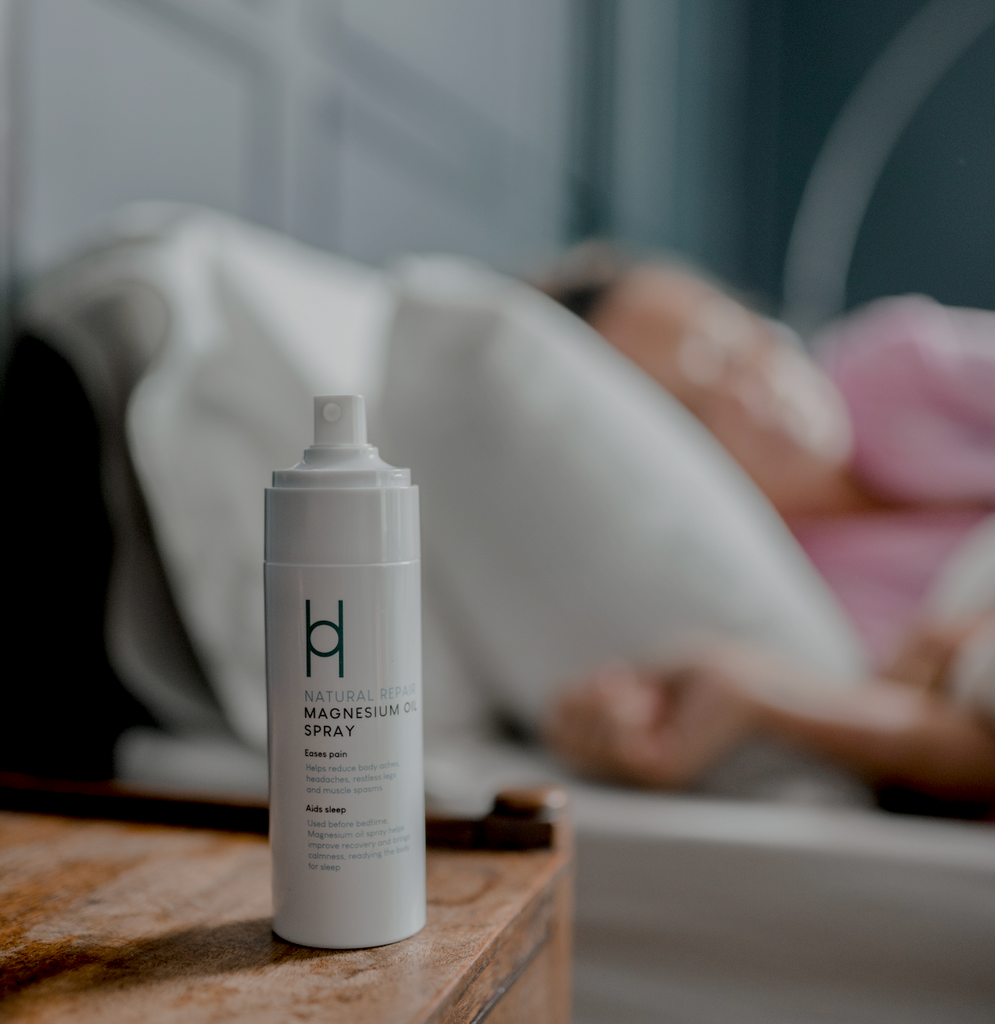
We've developed a Pillow Mist with lavender and mandarin that helps create a calming bedtime environment. The silk protein in it even moisturises your skin and hair while you sleep. Pair it with our Magnesium Spray—just a couple of sprays behind your knees and inside your elbows before bed. Magnesium helps relax tense muscles.
What to Avoid or Cut Back On
Menopause affects your cardiovascular and bone health, so what you don't put in your body becomes more important too.
Your risk for certain health conditions goes up during menopause, so being mindful about potentially harmful substances is worth the effort.
The hard facts:
- Smoking speeds up bone loss, makes hot flushes worse, and can actually bring menopause on 1-2 years earlier
- Too much alcohol messes with your sleep, triggers hot flushes, and increases breast cancer risk
- Excess sugar contributes to weight gain, mood swings, and inflammation
This isn't about being perfect—it's about making choices with your eyes open. If you're worried about your drinking or smoking, the NHS has some really good support available.
Staying Connected with Others
Feeling isolated during menopause makes everything harder. Having people around who understand what you're going through genuinely helps.
Navigating menopause can feel quite lonely, but talking to others who get it makes a massive difference. Social connections buffer stress and remind you that what you're experiencing is completely normal.
Ways to build connections:
- Join a local menopause support group or walking group
- Actually tell your partner, friends, or family what's going on—they can't support you if they don't know
- Find other women in the same boat (there are loads of us)
- Don't underestimate how much a good laugh with friends can help
The Menopause Charity and Menopause Café UK run groups across the country, both online and in person.
Half the population will go through menopause. That's millions of women in the UK right now navigating exactly what you're experiencing.
This World Menopause Day, let's keep talking about it, supporting each other, and using evidence-based approaches that actually work.
Your menopause journey is yours—but there's a whole community of women going through it too.

